home flickr
Your Ad Here
Showing posts with label travel. Show all posts

Friday, March 04, 2011

Thief pillages flight via toilet


An ingenious thief has swiped almost a quarter million dollars on a flight in the Caribbean after sneaking into the cash-laden cargo hold via the toilet, police say.

A Brink's security employee placed three sacks of cash containing a total 1.2 million euro in the hold of the Air Antilles plane before it headed from the French island of Guadeloupe to the Franco-Dutch island of Saint Martin.

The security guard took his seat on the ATR-42 turboprop plane but when the flight landed 40 minutes later it was discovered that 172,000 euro ($236,000) were missing from the sacks.

Police are seeking a man who complained he felt ill and spent most of the journey in the toilet. In fact, he was removing panels to gain access to the hold in the rear of the plane.

Shortly before landing, the unnamed man - who was travelling with a woman who appeared concerned about his health - asked a hostess for an ambulance to meet him on the tarmac, witnesses said.

When the ambulance arrived, the man said he suddently felt better and walked out of the airport without having to go through the normal security checks and disappeared, police said.

Cleaners who found bundles of notes in the toilet raised the alarm. The woman travelling with him was questioned in the baggage arrival hall but did not have any of the missing money.

Tuesday, January 12, 2010

Pedapod on the streets of Sydney

We were in the city on Saturday and saw this Pedapod zipping along Macquarie street. It's the Aussie version of a trishaw.


How awesome.
.. Next time I see one, I plan to be in it.

Sunday, June 21, 2009

LED traffic lights in Taiwan


Red lights in Taiwan will soon be much greener. By 2011, all traffic lights on the small island republic will be fitted with efficient LED lights thanks to a NT $229 million (US $7 million) project set to begin next year. Almost half of all traffic lights in Taiwan already use LEDs; the remaining 420,000 traffic lights will be converted over three years, providing an estimated savings of 85% in power consumption.

In addition to saving greatly on energy costs, LED traffic lights last years (standard bulbs only last months), remain brighter longer and their higher contrast levels with sunlight allow them to be viewed from longer distances. Taiwan’s Ministry of Economic Affairs plans to continue the LED work and change street lamps to efficient bulbs once the traffic signal project is complete.

Thinking lights to revamp traffic


INDEPENDENT "thinking" traffic lights will judge the volume of cars, buses and trucks and respond immediately to keep vehicles flowing as part of advances being developed for the NSW Government.

Elevated video cameras, infra-red sensors and radar as well as weight-activated sensors will monitor the traffic at each intersection.

A trial of the free-thinking traffic lights, part of the Smart Transport and Roads (STaR) project, is ready to proceed at an Albion Park roundabout, south of Wollongong.

At present, the co-ordination of neighbouring traffic lights is pre-programmed for specific times of day and predicted traffic flow patterns, such as morning and evening peak hour. A single loop system underground can detect when traffic is waiting at the lights but cannot discern the number of vehicles waiting or other conditions.

The STaR initiative involves the Roads Traffic Authority and information and communications technology company NICTA, with funding from the Federal Government and backed by universities.

The STaR project system engineering manager, Glenn Geers, said massive changes to how drivers negotiate the 3500 intersections with lights across the state would occur over the next five to 10 years.

Further developments will allow neighbouring traffic lights to communicate with each other and take action to control changing traffic flows, ensuring time savings and environmental benefits.

Dr Geers said communication between vehicles and traffic control systems will eventually become two-way, once a critical mass of vehicles have wireless radio systems. Drivers will be informed of major delays, availability of spaces at parking stations and the running times of connecting buses and trains.

"The potential by 2030 is amazing," he said. "By then, if you wake up late for work it won't matter because your car has already received the latest traffic data via wireless infrastructure.

"A voice will sound in your car informing you [that you] have only 32 minutes to make it to your meeting and you will be in time based on prevailing conditions. Then during the journey it could tell you about an accident ahead … and your revised travel time. It will then examine other route options and could tell you the quickest one."

Sunday, May 31, 2009

Charge drivers for when and where they go


CHARGE motorists more for using city streets during peak hours than those who drive on suburban and country roads - that's how traffic expert and NSW Government adviser Professor David Hensher plans to solve Sydney's transport crisis.

Social costs of Australian road congestion will rise to $20.5 billion by 2020 - with Sydney accounting for $7.8 billion - estimates from the federal Bureau of Infrastructure, Transport and Regional Economics show.

Professor Hensher, the head of Sydney University's Institute for Transport and Logistics Studies, recently presented his "Congestion and Variable User Charging" proposal - which involves satellite-tracking vehicles - to the Roads and Traffic Authority.

He recommends charging motorists for when and where they drive, and not simply the amount of fuel they consume.

Fixed charges such as registration should be abolished as they encourage driving because owners try to get their money's worth.

A congestion levy on cars entering the centre of Sydney would follow the model that has operated since 2003 in London, where he says traffic has fallen by about 30 per cent.

"The current pricing system is unfair," Professor Hensher said.

"Those who contribute more to congestion and pollution are not paying their fair share. Those who avoid congestion and use more environmental friendly cars are paying more than their fair share."

He proposes abolishing the federal excise of 38 cents a litre on petrol, as well as state fuel taxes. Instead, vehicles would be fitted with a satellite tracking device.

Motorists driving in peak hours in built-up suburbs, such as Mosman or Annandale, which have public transport alternatives, would pay more than drivers who travel through Galston or Camden or regional and rural NSW, where mass transit is poor or non-existent.

Drivers would swipe a "smart card" when buying petrol to determine their levy, which would vary according to use. "Many drivers would be much better off and would end up paying no levy because they live and drive in areas outside the zone," he explained.

The Dutch Government and Oregon in the United States are introducing variable user charging.

NRMA president Wendy Machin said before introducing such a system the state would need major upgrades to public transport, including services that ran across the metropolitan area, and not just to the central business district, as well as flexible working and school hours.

"Commuters would also need extensive and up-to-the-minute road and public transport information so that they could make informed decisions about how best to get around," she said.

Professor Hensher recommends ploughing some of the revenue from the levy back into roads and public transport. "The Government is planning 300 new buses for Sydney but it's not enough to keep up with demand," he said.

"If the Government puts a sufficient amount of the revenue back into transport, it will send a positive message to the electorate and recognise that those who pay should get a benefit."

Saturday, May 16, 2009

Transport for all need not cost $600b: expert


A SWEEPING, multibillion-dollar transport plan, to be unveiled next week, would link almost every home, office and university in Sydney to upgraded train, tram and bus services within 30 years.

The discussion paper from a leading transport researcher, Garry Glazebrook, of the University of Technology, Sydney, proposes six new metro lines, a heavy rail link to the barely serviced suburbs of south-west Sydney, and trams serving the inner suburbs and Parramatta.

Six major bus ring routes would directly link minor centres without commuters having to divert through the city.

While Dr Glazebrook's plan would cost $40 billion, it averages just $1.4 billion a year, in addition to the current expenditure of $3.2 billion a year on public transport.

He says it is a fraction of the estimated $660 billion Sydneysiders would spend on car travel over the next three decades if mass transit is not upgraded.

His proposal would also allow a 25 per cent increase in peak-hour trains on the existing heavy rail system, which is groaning under a large increase in patronage.

The key to the Glazebrook plan - which has taken shape over the past five years, as the Carr, Iemma and Rees governments have unveiled, altered and abandoned three previous designs for better public transport - is to integrate all the different services.

Trams would be linked to metro stations, for example, to ensure passengers wait a peak-hour maximum of five minutes when changing modes.

Dr Glazebrook said his plan would slash travel times on journeys from the outer suburbs to the city. "Trip length is also a key factor," he writes.

"For short trips, comfort is not so important but high frequency is vital. For long trips, comfort and travel speed become important."

The plan would also increase services to Sydney's job-rich "global arc", which covers the commercial centres between Macquarie University in North Ryde and Sydney Airport, as well as the city's second central business district, in Parramatta.

He proposes rolling the plan out in three stages.

The first stage, between 2009 and 2016, would include building a metro link between Epping and Castle Hill, a metro link between Parramatta and Strathfield, and tram lines from Lilyfield to Dulwich Hill, Rozelle Bay to Drummoyne and White Bay, and Circular Quay to Central Station.

Two bus ring routes - from Manly to Bondi Junction, via Mosman, Drummoyne and Kensington, and from Dee Why to Brighton, via Frenchs Forest, Chatswood, Burwood and Rockdale - would start operating.

Phase one would also include the first stage of the south-west heavy rail link.

The second stage, from 2016 to 2026, would link the north-west and west metros, via the Sydney CBD, and include a fast heavy rail link from Chatswood to Wynyard. It would also extend tram lines into the eastern and southern suburbs and convert the underused Carlingford rail line for trams.

The final phase, between 2026 and 2036, would complete the heavy rail, metro, tram and bus networks, and enable a high speed rail link between Newcastle and Canberra, serving the Central Coast, the Southern Highlands and Wollongong. A key element of the plan is to provide 30,000 parking places at 40 interchanges located at strategic points on the road and rail networks, along with 220,000 secure bicycle and scooter places. Dr Glazebrook would fund the expansion of the network by a mix of fares, efficiency savings, congestion and parking levies, increases in land values around stations, and carbon trading.

He said he hoped the Federal Government would contribute through its infrastructure budget.


http://www.dab.uts.edu.au/research/outcomes/index.html

Thursday, May 14, 2009

City of Sydney considers naked streets


STEPPING off the footpath in the centre of Sydney can be a perilous exercise. Even in a city usually choked with traffic, cars still manage to tear past. The alternative - waiting at a major intersection up to three minutes for traffic lights to change - is ignored by 70 per cent of pedestrians.

Now, the City of Sydney wants to take control of several main arteries through the central business district, rip out the traffic lights, strip the streets of safety signs, impose a speed limit of 10 kmh and give pedestrians the right of way.

The proposal for "naked streets" - the term used in European cities where streetscapes devoid of lights and signs are common - is designed to discourage driving in the CBD, without imposing financial disincentives, such as the congestion charge that is levied on motorists entering the centre of London during the day.

"We need to reclaim the city from the dominance of the car," said Councillor John McInerney, who chairs the council's traffic and transport committee. "The roads are public spaces that should accommodate pedestrians, cyclists as well."

At the moment, the city has only one such road, Barrack Street. Despite its appearance, the street is open to traffic. But its paving, street furniture, speed limit and general ambience causes most motorists to avoid it.

The council wants to expand the concept to Castlereagh and Pitt streets, which run almost the entire length of the CBD, and to O'Connell, Bent, Philip and Loftus streets at the northern end and to Hay, Harbour and Sussex streets and Eddy Avenue, at the southern end.

Cr McInerney says the key to the success of "naked streets" is the appearance. The paving for pedestrians needs to be the same as for vehicles. "That in itself sends a message to the driver that this is very much a shared space," he said.

The proposal has won the support of Ian Faulks, a former director of the NSW Parliament's StaySafe Committee.

Mr Faulks, now a consultant to interstate and overseas governments, says even a 20-30 kmh speed limit would be acceptable, as it would allow cars to stop quickly without hitting any pedestrians. He also says the European and North American experience shows drivers unconsciously slow down - and do not seem to mind - because of the surroundings.

"The trick is to make the road look like the sort of place where you need to exercise extra caution,"

Wednesday, April 08, 2009

2 wheeled PUMA from Segway & GM


A solution to the world's urban transportation problems could lie in two wheels not four, according to executives for General Motors and Segway.

The companies announced on Tuesday that they are working together to develop a two-wheeled, two-seat electric vehicle designed to be a fast, safe, inexpensive and clean alternative to traditional cars and trucks for cities across the world.

The Personal Urban Mobility and Accessibility, or PUMA, project also would involve a vast communications network that would allow vehicles to interact with each other, regulate the flow of traffic and prevent crashes from happening.

"We're excited about doing more with less," said Jim Norrod, chief executive of Segway, the maker of electric scooters. "Less emissions, less dependability on foreign oil and less space."

The 136 kg prototype runs on a lithium-ion battery and uses Segway's characteristic two-wheel balancing technology, along with dual electric motors. It's designed to reach speeds of up to 56 kmh and can run 56 km on a single charge.

The companies did not release a projected cost for the vehicle, but said ideally its total operating cost — including purchase price, insurance, maintenance and fuel — would total between one-fourth and one-third of that of the average traditional vehicle.

Larry Burns, GM's vice president of research and development, and strategic planning, said the project is part of GM's effort to remake itself as a purveyor of fuel-efficient vehicles. If Hummer took GM to the large-vehicle extreme, Burns said, the PUMA takes GM to the other.

Ideally, the vehicles would also be part of a communications network that through the use of transponder and GPS technology would allow them to drive themselves. The vehicles would automatically avoid obstacles such as pedestrians and other cars and therefore never crash, Burns said.

As a result, the PUMA vehicles would not need air bags or other traditional safety devices and include safety belts for "comfort purposes" only, he said.

Though the technology and its goals may seem like something out of science fiction, Burns said nothing new needs to be invented for it to become a reality.

"At this point, it's merely a business decision," he said.

Burns said that while putting that kind of communications infrastructure in place may still be a ways off for many American cities, the automaker is looking for a place, such as a college campus, where the vehicles could be put to use and grab a foothold in the market.

There's currently no timeline for production, Burns said.

Monday, March 16, 2009

.. Just married, then back to Australia for me

p1070311.jpg

Last week was a big week! :

My lovely girlfriend and I were married last Wednesday morning at Jabatan Pendaftaran Negara (National Registration Centre) @ Putrajaya.

An exciting day! I can't believe it finally happened, Pei Lin is probably even more surprised than I am that she managed to actually get me there. It was amazing how much cooler the suit felt after the ceremony too. I didn't feel too stressed, but I guess I must have been a bit eh.

We spent about 8 hrs the next day doing our official photography, which was exhausting, but the results look really great. Thanks to Alex from La Casamia "De Casamia" (thanks for the correction honey).

Saturday night I left KL, where I'd been living for the last 2 and a half years, and moved to Sydney. I'll certainly miss KL and the many great people there, at the same time though, it's sure nice to be back on home turf.

My lovely wife (wow, still can't believe I'm saying .. 'wife' hehe) is staying in Malaysia for a month or so while I'm getting settled here, and her visa is getting sorted there.

Tuesday, February 24, 2009

Almost..


Okay, all the pieces are falling into place :).

We've applied for a spouse visa for the girl (which they let us apply for even though we aren't married yet, and therefore don't have a wedding certificate), we've booked the wedding registration and paid for the photography, just need to finalise the flight and freight for the belongings and all systems are go go go.

I've decided to go with excessBaggage.com for the freight, it's about $1400 AUD for 8 x 60cm x 41cm x 34cm boxes, sent via air & door to door, so while it's pricey, it's also very convenient.
No need to hire vans and deliver or pick stuff up from an airport.

The registration is on the 11th March at Putrajaya, and most likely I will fly out to Australia on the 14th. The lovely lady will probably stay in Malaysia for a few weeks while I set up camp in Sydney a bit, you know, do novel things like find a place to live and buy a bed and a fridge etc. (..and television and internet connection and couch and 'a table').

When we had our interview with the good people at the Australian High Commission, they thought that there was a chance that the visa could be quite quick to approve, given that Peilin has a job offer in Sydney and our application was quite complete. If she stays in KL for a little it will also give that a chance too.

Who knows, maybe it's going to take longer that they suggested (it can take up to 6 months), if so she can come to Australia whenever she's ready and we can fly to New Zealand for the weekend when it comes time for the visa (the final part of the approval process is entering the new country, even if you're already there, you've got to do it again).

Sure, it could easily be argued that flights and freight are the most important part of moving internationally, but considering all the things we've achieved so far, that stuff seems ridiculously trivial.


It's been months of gathering documents and getting them legally certified, and while I'm expecting to have to redo a couple of things, I think we're mostly there.
It's been a stressful few months too! I'll be glad not to have to do something like this again for a while. And it should be a while too, unless I decided to start in import business of Asian wives. Hmm..

Where was I? oh yes..
I'm also getting a couple of suits tailored from the excellent Page Shop, in Sungei Wang. I can actually get one tailored here for about the same price as I could walk into a shop in Australia and buy one ready-made, so it's money well spent. Not that I'm a big suit wearer, but whenever the opportunity comes up, I'm going to be so ready for it. So ready.

I'm getting one in a charcoal grey, and one pinstripe blue, and two shirts made as well. For both the suits and the shirts you can choose from a wide range of materials and colours. It's costing me 2400MYR, which is about $1000 AUD for the lot. Not sure which to wear for the registration..

I've included the contact details for The Page Shop below, in case anyone wants them. Highly recommended. They even gave me beer while having my measurement done. C'mon, THAT's service :) .


Page Shop
Lot No. 100, 1st Floor, Sungei Wang Plaza,
Jalan Sultan Ismail,
55100 Kuala Lumpur.
Ph: 603-2148 8168.

Saturday, February 14, 2009

United Arab Emirates building network of driverless electric taxis


When you think United Arab Emirates, chances are you think oil, especially in the wake of last year's overwhelming gas prices. But, the area is trying to change its image by creating a gasoline-free town called Masdar City that will be a futuristic and environmentally-friendly destination. City planners recently unveiled plans for a new way for people to get where they're going: electric taxis that will lack drivers.

The streets of Masdar City are said to be entirely free of traditional cars, so these podcars will be the only way of getting around short of taking a train, riding a bike, or just walking. These cars, and the other means of transportation, will actually be situated below ground, as Masdar City’s streets will be raised off the ground, but buildings will be built at ground level, with the first couple of stories serving as basements and space for technical equipment. The idea is you'd swipe an access card, be greeted by name, and then be silently whisked away to your destination -- or close to it, at least.


The first cars are set to hit the subterranean roads sometime later this year, and, having survived many a harrowing trip with a human taxi driver, we can't wait to see them spread to other metropolitan areas.


PRT vs. Monorail

Tuesday, January 06, 2009

Backyard bliss may soon be a memory


THERE are two Sydneys of the future. In one we build on empty paddocks 45 kilometres from the CBD, where workers wake before dawn to spend hours in traffic driving to work.

In the other we abandon the McMansions of Kellyville - and our cars - in favour of high-rise apartment living and subway transport.

The state's transport boffins want us to choose the latter in a new blueprint for the city that relies on an underground metro. The Federal Government backs it, too.

The rationale for moving away from large houses on large blocks in far-flung suburbs to inner-city living is cost - both economic and environmental - transport and planning experts say.

In an era of peak oil and climate change, where higher petrol, water and electricity prices will significantly increase the cost of living, we can no longer afford suburban sprawl, they argue.

That does not mean the death of the backyard and the cul-de-sac. But it would mean fewer of them.

The debate about higher-density living has been going on for decades, but every time it is raised there is a community backlash, says Professor Peter Newman of Curtin University, a former NSW Sustainability Commissioner and now a member of the advisory board for Infrastructure Australia.

Newman says resistance to high-rise living comes mostly from Anglo-Saxons worried crime will rise and house prices fall.

"That has … been shown to be nonsense," he says.

Apartment complexes can be designed to encourage a sense of community, safety and provide for affordable housing, because "design is everything".

"If you want to make a slum, you can … density doesn't wreck or create an area, in itself."

Research by Newman and the planning and infrastructure consultancy Parsons Brinckerhoff found Sydney's suburban sprawl costs the economy and the environment twice as much as inner-city housing. The cost of infrastructure, transport, health and greenhouse gases for new housing built on a city's fringe is worth $653 million for every 1000 new dwellings, compared with $309 million for inner-city development, they say.

For every 1000 housing blocks, the Government could save $85 million on power, water, sewerage, schools and hospitals if it built close to central business districts rather than on the city's fringe, and $250 million in transport costs could be saved in 50 years.

That amounts to an $85 million subsidy to developers on the fringe, Newman says.

During the past five years Sydney's middle-ring suburbs, such as Liverpool, Hurstville and Blacktown, have joined fringe suburbs in what Griffith University researchers describe as a new landscape of oil and mortgage stress. Car use, income and mortgage repayments have combined to affect more than 40 per cent of Sydney's suburbs, according to work done by the university's Jago Dodson and Neil Snipe. This comes as the State Government has backed away from big rail projects in the north-west and south-west of the city, areas crying out for public transport.

If at least some of our residential housing must be high-rise - and planners tell us there is a market - can we trust the Government to sell the idea to the community? That could depend on whether this Labor administration can restore the community's trust in its relationship with developers.

Until voters believe planning reforms are for their benefit instead of developers', they will fight to keep the suburban dream alive.

Get ready Sydney: high-rise suburbs coming


SYDNEY will be reinvented as a high-density metropolis serviced by mass-transit subways under a transport blueprint being developed by senior state and federal government bureaucrats.

Powerful new legislation underpinning a proposed metro network costing $13 billion will enable transport and planning officials to reshape the inner suburbs of Sydney, paving the way for apartment towers as high as 15 storeys as well as large-scale retail and office blocks.

To justify the multibillion-dollar investment, tens of thousands more people would have to live and work within walking distance of the proposed Parramatta Road metro stations, according to planning officials behind the overhaul.

Heritage inner-west suburbs such as Glebe, Leichhardt, Rozelle and Camperdown are to be among the first to face radical changes should both the $8.1 billion West Metro underneath Parramatta Road and the $4.8 billion CBD Metro go ahead.

A joint state and federal government study into the West Metro, leaked to the Herald, revealed it would "significantly reduce travel times between western Sydney and the Sydney CBD".

"It would also provide significant support for transit-oriented development, urban revitalisation and services to new rail markets," it said.

The controversial population targets in the inner west, set in the State Government's planning blueprint, the Metropolitan Strategy, would be eclipsed by new targets to support a mass-transit subway.

"It is not to say the Metro Strategy is wrong but the world has shifted," said a senior state planning official. "The next round of the Metro Strategy will have to consider greater in-fill [urban density]."

But in the face of anti-development campaigns in the inner west, the state Labor Government may have trouble selling the high-rise living plans to nervous western Sydney MPs.

The Transport Minister, David Campbell, acknowledged that an overhaul of the areas serviced by the metro was a central concern for the State Government.

"One of the main benefits of this corridor would see the revitalisation of urban growth and employment for communities along Parramatta Road," he said.

Late last year, a team of advisers from Infrastructure Australia took a bus tour to one such location, MarketPlace shopping centre on Marion Street, Leichhardt, to scout the location for a metro station.

A new transport authority, quietly legislated by the State Government in late November, has been given unprecedented powers to develop the land above and around proposed metro stations.

On November 26, a Sydney Metro Authority was created by a special amendment to the Transport Administration Act. It still does not have a board or chief executive but it has new powers "to carry out development, or facilitate, manage or finance development, on land located on, or in the vicinity of, metro railway systems". RailCorp has no equivalent power.

Concentrating housing around train stations is a well established policy in cities around the world to ease congestion, prevent suburban sprawl and reduce the cost of services such as water, power and transport.

The Rudd Government is leading a new push to make Australian cities look more like London, Tokyo and Singapore, which have twice as many people and jobs per hectare as Sydney.

Infrastructure Australia, a federal body set up to recommend funding for transport projects across the country, said in a recent influential report that residential and commercial densities in Sydney were too low.

"Increasing densities around rail stations can increase the economic and other benefits that might flow from the considerable public investment in urban rail projects. However, this is an area where governments have a mixed record," it said. "Much more can be done to increase densities around transport nodes. A strong, proactive approach needs to be taken to integrate land use, zoning and planning policies more effectively."

One member of the Infrastructure Australia board, Professor Peter Newman, said in an interview with the Herald that Sydney and Melbourne could no longer afford to exist as two-tiered cities where the wealthy had access to transport and the poor struggled on the fringes.

"That is one of my themes, that we stop cities developing into eco enclaves surrounded by Mad Max suburbs," he said.

"If you want to go with the metro, you would need to think about higher densities, and in particular, high densities around the train stations.

"They will be apartments, there is no doubt about that. Chatswood is the best example but a lot of people will find that hard to take."

A spokesman for the Planning Minister, Kristina Keneally, said there would continue to be a mix of housing styles in the city, including single dwellings, terraces, townhouses and low-, medium- and high-rise apartment buildings. "Home purchasers will continue to make choices between these housing styles which suit their personal circumstances," said the spokesman.

Two previous government plans in 2001 and 2005 tried to force councils to boost population throughout the inner west and revitalise Parramatta Road. Both failed in the face of strong community opposition.

Initially, 130,000 dwellings of up to six storeys were to be built along the road at a rate of 4000 a year. Four years later that was cut to 70,000.

The 2005 Metropolitan Strategy declared 30 per cent of new residents would be housed in greenfield areas in the north-west and south-west of Sydney, serviced by extensions to the CityRail network. The remainder would be squeezed into existing suburbs.

But since the former premier, Morris Iemma, dumped the rail expansion in favour of a metro network, the Metropolitan Strategy has fallen by the wayside. Now, as Sydney continues to grow, the argument that established suburbs should house more people has gained currency.

Ku-ring-gai could be seen as a model for how these new densities could be achieved. Last year, the Government usurped council planning powers to allow a dramatic increase in building heights along CityRail's North Shore line. Two-storey shopping strips like Roseville and Turramurra will be overshadowed by mixed-use developments as high as seven to nine storeys, and Gordon will have 15-storey towers.

Technically, the Department of Planning remains the consent authority for any such development. "Any changes will be managed in the context of existing planning processes, including consultation with local communities," Mr Campbell said.

Transport officials behind the new railway line successfully lobbied to have the power enshrined in legislation, creating new tensions with the Department of Planning.

The legislation makes it easier to package property development with private sector construction contracts to help finance the railway line.

One source told the Herald funds from property development were better spent, however, on local amenities that could include anything from bicycle lockers to libraries.

"It is better off to help the amenity around the stations," he said.

Go west - it will take you only 27 minutes to the city

THE revolutionary $8.1 billion West Metro will transport up to 30,000 people an hour from Parramatta to the CBD in less than 27 minutes, stopping at nine underground stations, according to secret feasibility work being undertaken by the state and federal governments.

Thirty single-deck trains each hour would run through twin tubes underneath Parramatta Road if sufficient state, federal and private sector funds emerged in coming months to pay for the project.

The metro would link with the Rees Government's promised CBD Metro, costed at $4.8 billion, to create the first of what the state's top transport planners hope will be a city-wide network of modern, driverless subways.

The two final routes being considered for the project, obtained by the Herald, include metro stations at Granville or Rosehill, Auburn or West Homebush Bay, Burwood, Five Dock, Leichhardt, Camperdown and Sydney University.

There will also be multi-million-dollar transport interchanges constructed around metro stops built at Parramatta, Olympic Park, Camellia, Strathfield and Central Station, where passengers can switch between CityRail, metro and bus services.

A separate transport bureaucracy, the Sydney Metro Authority, has been given unprecedented powers to redevelop land around stations, raising high-rise apartments along Parramatta Road to help boost the project's viability.

Senior government officials have confirmed the target travel time from Parramatta to Central is 24 to 27 minutes. CityRail services now take between 26 and 32 minutes, but the metro would operate via all stops at such a high frequency that commuters would not require a timetable. It would also capture big inner-west catchments in areas such as Five Dock, Leichhardt and Camperdown, which are not directly serviced by the existing rail network.

The Transport Minister, David Campbell, said station locations had not been finalised.

"There is no final determination on alignment or stations for the project and this will only be determined after more detailed planning, should the Federal Government fund the project through Infrastructure Australia," he said.

Parramatta Road is one of the country's most congested arteries, with average vehicle speeds during the morning peak just 28 kmh, down from 33 kmh in 2004. A draft of the joint NSW and Commonwealth feasibility study claims the new line could dramatically ease this gridlock.

"It has the potential to significantly reduce travel times between western Sydney and the Sydney CBD, and to relieve congestion in the western corridor and the broader rail network," the study said.

There are 1300 trips operated by Sydney Buses along Parramatta Road each weekday, carrying more than 50,000 commuters. The CityRail Western line carried 35 million passengers in the 12 months to December 2007, with more than 32,000 people on 24 trains during the 70-minute height of the morning peak.

"A significant number of [these] services exceed 'crush capacity' of 135 per cent, with loads often up to 180 per cent," the feasibility study said.

The now-shelved North-West Metro was to have carried 50 million passengers per year under Victoria Road. Senior transport planners hope the Parramatta Road project might garner similar figures.

The study said the metro was the Government's central tool to combat the strangulation of the existing rail network.

"The recent strong growth rates in peak period rail patronage, combined with future growth, will see capacity exceeded on several parts of the CityRail network," it said.

The West Metro is a key contender among the 94 projects being considered by the Rudd Government's Infrastructure Australia, which will award about $8 billion to transport, water and energy projects around the country from the Building Australia fund.

The Herald has been told, however, that Infrastructure Australia has been sorely disappointed with the lack of detailed analysis undertaken in NSW for both the West Metro and the CBD Metro.

If the metro fails to meet the mark, the Prime Minister would be forced to announce another road, a duplication of the clogged M5 East, as the Commonwealth's project in Sydney - a tunnel that would do nothing for urban congestion.

Sunday, November 02, 2008


Jalan Kejora back to Jalan Alor!

KUALA LUMPUR: Much to the joy of the public, a new signboard bearing the name "Jalan Alor" replaced the Jalan Kejora signboard on Thursday in Bukit Bintang by the Kuala Lumpur City Hall (DBKL).

The new signboard was put up after Kuala Lumpur mayor Datuk Ab Hakim Borhan announced on Oct 29 that the previous road name would be retained after Federal Territories Minister Datuk Seri Zulhasnan Rafique intervened.

In a statement yesterday Zul­hasnan urged DBKL to refer matters concerning change of road names to the ministry in future to avoid similar controversies.

“Jalan Alor is not only popular in Malaysia but also all over the world.

“I understand the people’s sentiment over the initial decision for the change to Kejora and I hope the hawkers on Jalan Alor will press on cleanliness,” he said.

Two weeks ago DBKL replaced the old Jalan Alor signboard with Jalan Kejora which created a huge public outcry that caught the attention of the Federal Territories Ministry.

Bukit Bintang MP Fung Kui Lun said Jalan Alor was a brand name for over 50 years to both locals and foreigners and the decision to change it would have caused confusion.

“This is what the people want and I think it is fair to retain the name, everyone is happy,” he said.


Wednesday, October 22, 2008


India launches moon mission in Asian space race


Scientists have better maps of distant Mars than the moon where astronauts have walked. But India hopes to change that with its first lunar mission.

Chandrayaan-1 - which means "Moon Craft" in ancient Sanskrit - launched from the Sriharikota space centre in southern India early Wednesday morning in a two-year mission aimed at laying the groundwork for further Indian space expeditions.

Chief among the mission's goals is mapping not only the surface of the moon, but what lies beneath. India joined what's shaping up as a 21st century space race with Chinese and Japanese crafts already in orbit around the moon.

The United States, which won the 1960s race to send men to the moon, won't jump in this race with its new lunar probe until next spring, but it is providing key mapping equipment for India's mission.

As India's economy has boomed in recent years, it has sought to convert its new found wealth - built on its high-tech sector - into political and military clout and stake a claim as a world leader. It is hoping that a moon mission - coming just months after it finalized a deal with the United States that recognizes India as a nuclear power - will further enhance that status.

"It is a remarkable technological achievement for the country," said S. Satish, a spokesman for the Indian Space Research Organization, which plans to use the 3080-pound (1723-kilogram) lunar probe to create a high-resolution map of the lunar surface and what minerals are below. Two of the mapping instruments are a joint project with NASA.

Until now, India's space launches have been more practical, with weather warning satellites and communication systems, said former NASA associate administrator Scott Pace, director of space policy at the George Washington University.

"You're seeing India lifting its sights," Pace said.

To date only the US, Russia, the European Space Agency, Japan and China have sent missions to the moon.

While much of the technology involved in reaching the moon has not changed since the Soviet Union and the U.S. did it more than 4 decades ago, analysts say current mapping equipment allows the exploration of new areas, including below the surface.

In the last year, Asian nations have taken the lead in exploring the moon. In October 2007, Japan sent up the Kaguya spacecraft. A month later, China's Chang'e-1 entered lunar orbit.

Those missions took high resolution pictures of the moon, but aren't as comprehensive as Chandrayaan-1 will be or NASA's upcoming half-a-billion-dollar Lunar Reconnaissance Orbiter, Pace said. The most comprehensive maps of the moon were made about 40 years ago during the Apollo era, he said.

"We don't really have really good modern maps of the moon with modern instrument," Pace said. "The quality of the Martian maps, I would make a general argument, is superior to what we have of the moon."

NASA has put probes on Mars' frigid polar region, but not on the rugged poles of the moon. Yet the moon's south pole is where NASA is considering setting up an eventual human-staffed lunar outpost, Pace said.

The moon's south pole is "certainly more rugged than where Neil Armstrong landed. It's more interesting. It's more dangerous," Pace said. "We need better maps."

And while the moon race in the 1960s was a two-country sprint between the United States and the USSR, more countries are involved this time. China, in particular, has been forging ahead in space.

Beijing sent shock waves through the region in 2003, when it became the first Asian country to put its own astronauts into space. It followed that last month with its first spacewalk.

More ominously, last year China also blasted an old satellite into oblivion with a land-based anti-satellite missile, the first such test ever conducted by any nation, including the United States and Russia.

While this is India's first space expedition beyond Earth's orbit, the head of India's space agency believes it can quickly catch China, its rival for Asian leadership.

"Compared to China, we are better off in many areas," Indian Space Research Organization chairman G. Madhavan Nair said in an interview with India's Outlook magazine this week, citing India's advanced communication satellites and launch abilities.

India lags behind only because it has chosen not to focus on the more expensive manned space missions, he said. "But given the funds and necessary approvals we can easily catch up with our neighbor in this area."

The mission is not all about rivalry and prestige. Analysts say India stands to reap valuable rewards from the technology it develops and, according to Pace, it already shows increased confidence in difficult engineering and quality control.

"Each nation is doing its own thing to drive its research technology for the well-being of that nation," said Charles Vick, a space analyst for the Washington think tank GlobalSecurity.org.

"Traditionally, for every dollar put into space research, we get that much more back," he said.

India is also collaborating closely with other countries on the mission.

Of the 11 instruments carried by the satellite, five are Indian, three are from the European Space Agency, two from the US - including radar that can search for ice under lunar poles - and one from Bulgaria.

Beyond 3-D mapping the moon and scanning for mineral deposits, the $US80 million ($117 million) mission will test systems for a future moon landing, the Indian space agency said.

India plans to follow this mission with landing a rover on the moon in 2011 and eventually a manned space program, though this has not been authorised yet.

And the Indian space agency was already dreaming of more.

"Space is the frontier for mankind in the future. If we want to go beyond the moon, we have to go there first," said Satish.


London's buses go to hell

LONDON: Buses emblazoned with advertisements declaring "there's probably no God" will soon be travelling through the streets of London after the prominent atheist Professor Richard Dawkins agreed to help pay for them.

Campaigners say the messages will provide a "reassuring" antidote to religious ads that "threaten eternal damnation".

Professor Dawkins, the author of The God Delusion, said: "Religion is accustomed to getting a free ride - automatic tax breaks, unearned 'respect' and the right not to be 'offended', the right to brainwash children.

"Even on the buses, nobody thinks twice when they see a religious slogan plastered across the side. This campaign to put alternative slogans on London buses will make people think - and thinking is anathema to religion."

The advertising campaign, which could be plastered across as many as 60 buses for a month if just £11,000 ($27,000) is raised, was triggered by a blog posting. Those behind the project are confident they will raise enough money to pay for two sets of 30 bendy buses to travel through the capital in January bearing the atheist slogan: "There's probably no God. Now stop worrying and enjoy your life."

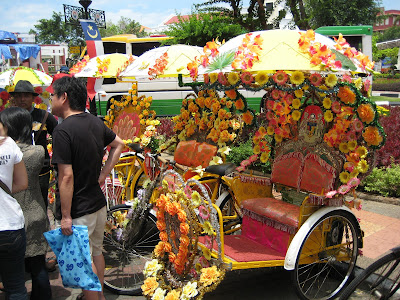
Melaka (Malacca)


The site where the city of Malacca stands today was the center of Malaccan history.
It was the capital of the Malaccan Sultanate and was the centre of the Malay world in the 15th and the 16th century after the Malays moved over from Sumatra and it was the most developed part of the Malay Peninsula before it fell to the Portuguese in 1511.

Centuries of colonization by the Portuguese, Dutch and the British as well as development of Straits Chinese (Peranakan) culture have influenced the architecture of the town.

.. And we went there recently for a couple of days :).


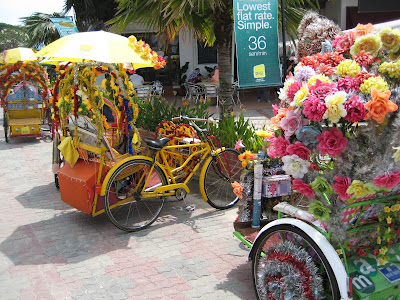
The trishaws are a great way of seeing the town, and not really that expensive either.


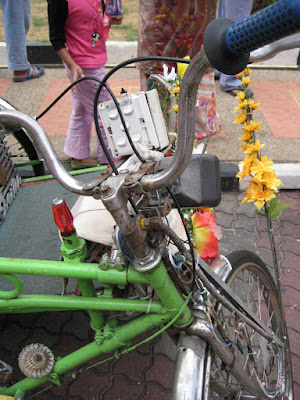
Some of the wiring on these things is incredible.. check the above, those are interior light switches. Most, if not all of the trishaws has a car battery or similar in the back that they use to power the pounding music (a mishmash of pounding techno and 80's love songs) and this here is the control centre of it all.


You can see a different (and probably safer) configuration above.


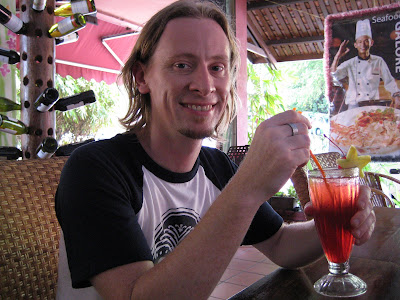
It was really hot, so we treated ourselves to a couple of cocktails before lunch. I'm liking Singapore Slings very much. I had a few of them, just to make sure.

Pei Lin enjoys 'Sex on the beach' .. ehehehe.


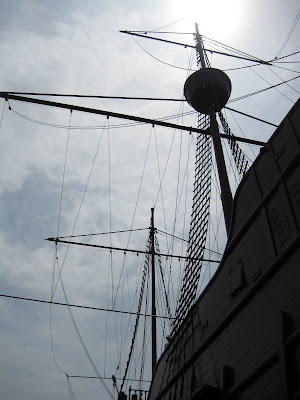
Replica Portuguese ship. Interesting 6/10; refuge from the heat 9.5/10.


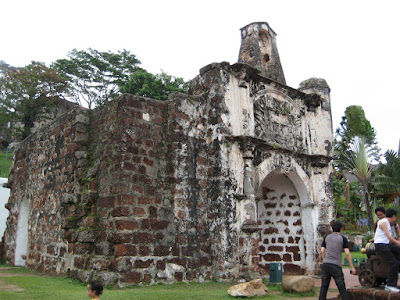
A' Formosa - built by the Portuguese in 1511 as a fortress to safeguard their settlement


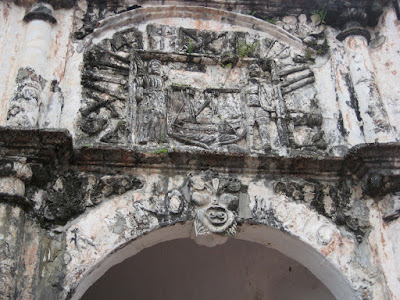
Skull & cross bones on dutch(?) grave stones


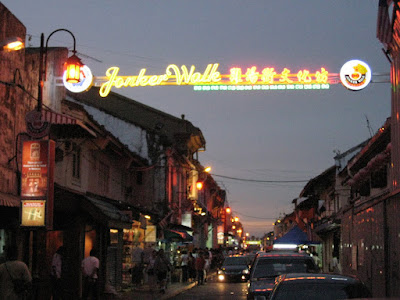
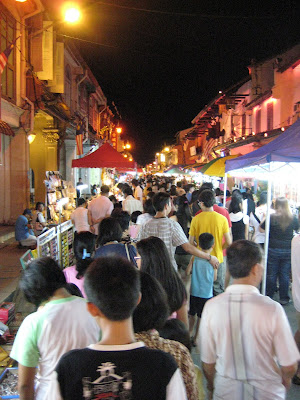
Night Markets on Jonkers Street


View from a tri-shaw


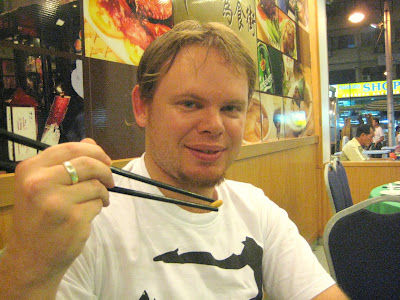
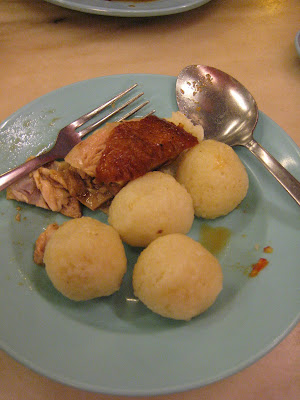
Oh course, how could we not have the famous Malaccan Chicken Rice ball.

All in all, Malacca is an excellent way to escape from KL for a couple of days. Great food, friendly people, and more sights, sounds and novelties that you can poke the proverbial stick at.

High recommended. In fact, I'm going to go back soon.


Locals and tourists want Jalan Alor to be maintained

KUALA LUMPUR: Jalan Alor on Yahoo! returns more than 900,000 results. It is famous.

Yet, Kuala Lumpur City Hall is adamant that changing the name to Jalan Kejora - a move that has sparked a public outcry - is the right thing to do.

Datuk Bandar Datuk Ab Hakim Borhan said the move, which was planned three years ago, would give the tourist destination of Bukit Bintang a new image.

Popular spot: Azmi (left) serving customers at his 'Nasi Lemak Alor Corner' stall along Jalan Alor recently.


"Other roads in the area will soon have new names, and they will all be named after the stars to create the new image," he said yesterday during a visit to a landslide site in Cheras.

The name change came to light when city hall replaced the road sign about a week ago. The Jalan Alor name has been in existence for 35 years.

City Hall explained that the name was changed at the request of the National Economic Action Council to meet requirements under the road naming guidelines and to go with other roads in the vicinity.

The MP for Bukit Bintang, Fong Kui Lun, who has brought the matter up with the Federal Territories Minister, said: "How can you change the name just like that?"

Name confusion?: Tourists (from left) O'Connor, Jack Coppock and Caitlin Coppock feel that the popular street should retain its name for the convenience of tourists looking for the place the next time they return here.


He said a search of Jalan Alor on the Yahoo! search engine returned more than 900,000 results.

"You can imagine how famous this food haven is internationally," he said.

Fong said that the area had taken years to establish its reputation and changing its name overnight was unfair to the locals.

"We want the name maintained," he said, adding that he would bring up the matter up to the Tourism Minister.

Traders in the area could not fathom the rationale behind the move.

"Why must they change the name when it is already popularly known among the locals and tourists?" said Loke Yew, who has been selling fruits there for the past 35 years.

Trader Azmi Aznal said: "Even my stall is called Nasi Lemak Alor Corner and now City Hall has changed the road name for no apparent reason.

"Does that also mean I should change my stall's name too?"

Several tourists have frowned at the move.

"The new name will definitely confuse some of us when trying to find the place in the future," Australian tourists Jenny O'Connor and Caitlin Coppock said.

It is learnt that traders and residents have embarked on a signature campaign to stop the change in name.

Datuk Dr Lee Chong Meng, the Bukit Bintang MCA division chief and a former MP there, said the change was not justified, and that City Hall should focus on more meaningful issues.

Wednesday, October 01, 2008

Mick visits KL


A couple of weeks ago, my good pal Mick ventured forth from the golden shores of Australia and graced us with his presence in KL. As it was his first trip here, we did our share of the tourist circuit, such as:


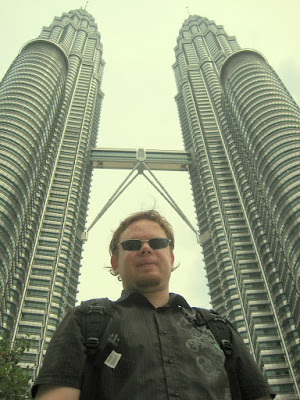
having our photos taken outside KLCC,


going to the Batu caves,


.. and taking photos of the monkeys


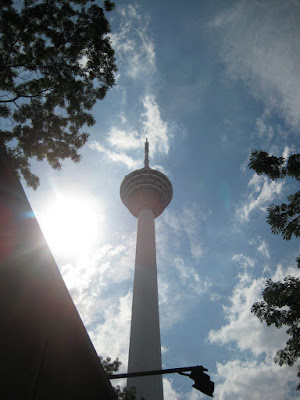
going up KL tower,


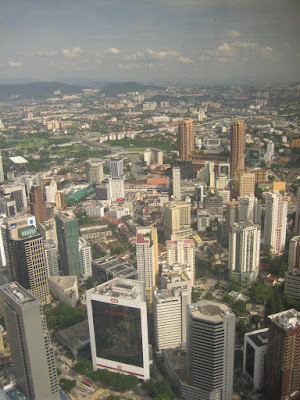
taking photos from the top,


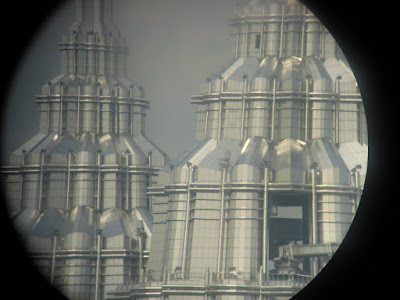
.. I discovered that if I held my camera just right, I could take photos through the telescopes they have up there. The view was amazing..


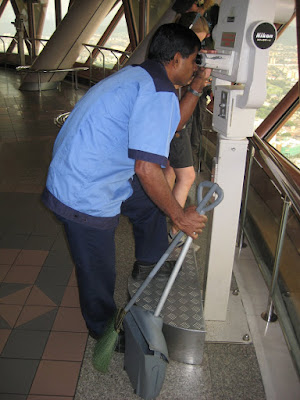
.. even the staff think so!


after checking out a few more of the sites of KL, we flew down to..


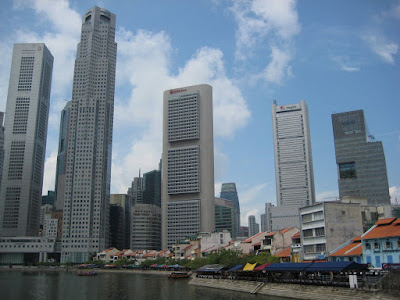
err...Singapore!


.. still more Singapore


.. that's right, you got it, Singapore


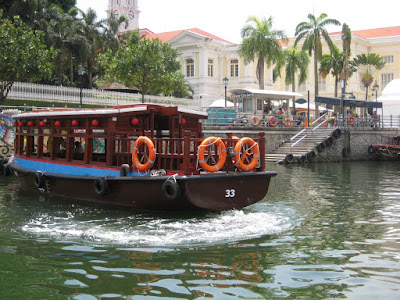
We caught boats..


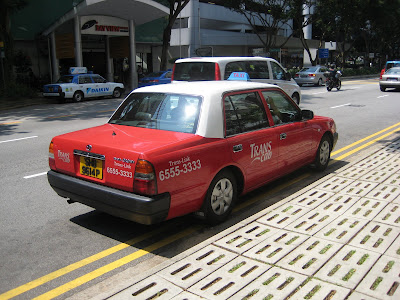
.. and taxi's


.. we went to the zoo


.. and saw the animals..


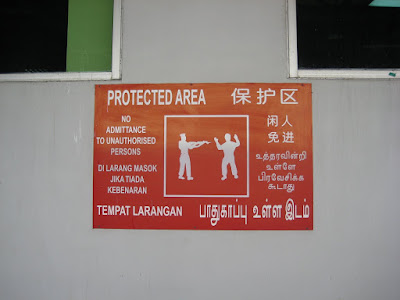
.. we didn't even get shot.


.. so we drank some beer.


Odd Search